
















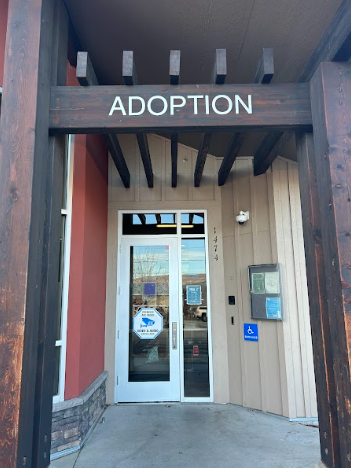
When I used to imagine humane societies, I would picture long, dark hallways lined with small cages. I would picture big, sad animal eyes and deafening barking. However, when I stepped into the Wenatchee Valley Humane Society, it couldn’t have been more clear that these preconceived notions were completely fictional.
(Ella Gemeinhart)
Upon stepping into the shelter, I was greeted by warm, busy workers who were answering phones, talking to interested customers, and jotting things down. From there, I met Nomi Stutzman, the Director of Operations at WVHS, and the woman who had helped me with every step that got me to my tour of the facilities and the interviews that were vital to this project.
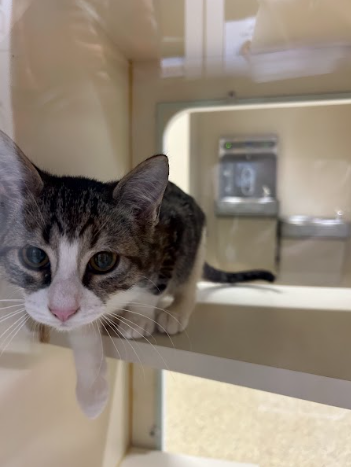
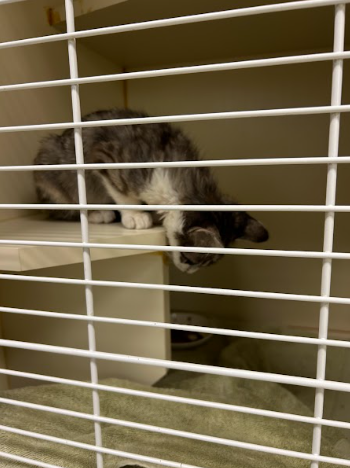
We were joined by Yaned Rodriguez and Chicago, Rodriguez’s adorable chihuahua with separation anxiety, whom Rodriguez had adopted years before even getting involved at the humane society. Our tour started with the cats- a room filled with cabinet type enclosures with glass covers, behind which cats snuggled, slept, and batted at tiny feathered toys.
(Ella Gemeinhart)
Later, when doing a “round-table” style interview with five members of their staff, Barbara Hayes, Jessica Robertson, Blaire Taite, Yaned Rodriguez, and Nomi Stutzman, I had the opportunity to ask them lots of questions about the shelter.
(Ella Gemeinhart)
“The hardest thing would be support locally. I think we don’t get enough of it, and recognition as well,” tells Rodriguez. Her concern about the community not understanding or wanting to help as much as the shelter needs was not an uncommon one.
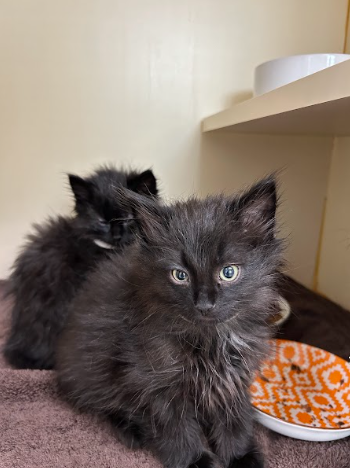
The staff agreed that the best ways for the community to help are to volunteer, foster, or donate, especially in the form of dog or cat food (I have added the links to these WVHS webpages below this article). Additionally, people should ask questions and educate themselves. Just calling and asking questions goes a long way.
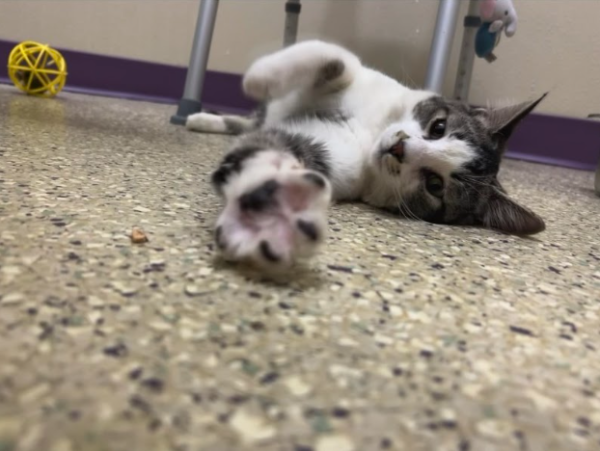
(Ella Gemeinhart)
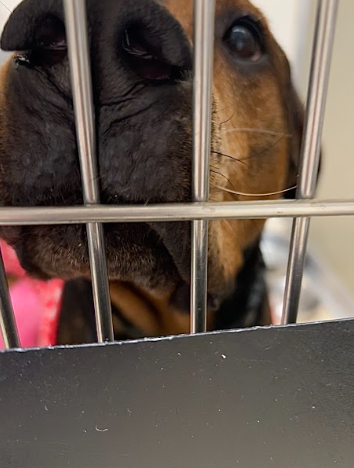
Visiting the dogs took longer. We walked past a sign that pointed us in the right direction, under which hung a bucket of earplugs, offering passersbys a way to shield their ears from the potential loud barking of the kennels. Luckily, the shelter was not at full capacity at the time of my visit, so upon pushing open the door there was only a short round of curious barks. We entered the main hall, a long walkway lined on both sides by kennels with eager-to-get-out dogs, walking past wagging tails and eyes that beg you to stop to pet them.
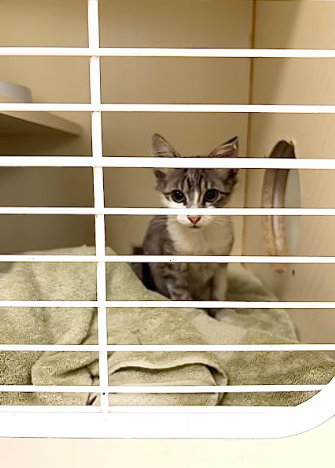
(Ella Gemeinhart)
The shelter’s building itself was renovated in 2014, making better facilities for the animals it serves. Since then, the shelter has made so many changes to become the best it can be, both for the pets that stay there and the people who come in.
“The lack of education in the community is a really big hurdle that we are still trying to overcome,” says Hayes, a woman of many hats. She is the senior animal care technician and customer service representative at Wenatchee Valley Humane Society, as well as a dispatcher at Wenatchee Valley Animal Care and Control.
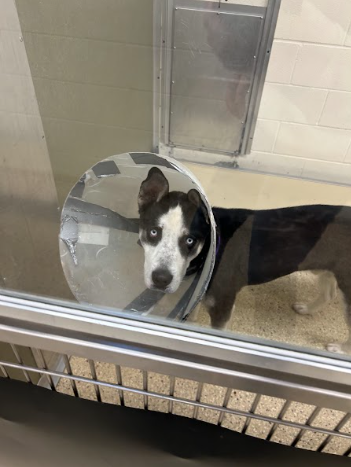
(Ella Gemeinhart)
The group I interviewed also spoke of how much goes on behind the scenes. So much education goes to even basic volunteers, such as how cats and dogs use their brains, how to read animals’ behaviors, and online courses. Unfortunately the shelter, in some peoples’ minds, is still a bad place, earning stereotypes like “dog jail” that could not be further from what it really is.
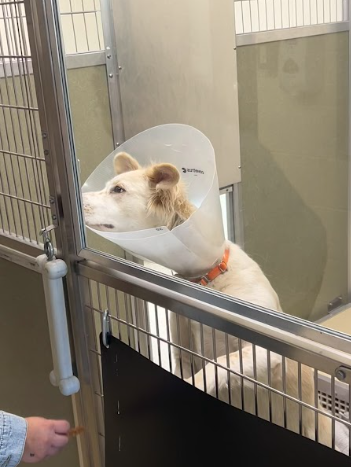
“I think the hardest thing is . . . the community doesn’t understand what exactly everything is that goes into working here. They don’t see the shared tears, they don’t see the stress, they don’t see all the compassion. They just see what one person’s experience is and then they run off of what that was,” explained Stutzman, the Director of Operations at WVHS. She shared how even just one negative Google review has a strong impact on the shelter’s reputation.
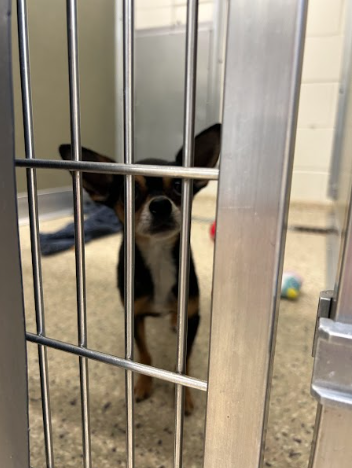
I also learned a lot about fostering. Fostering can be for months or even just for a few days. It lets animals have a kennel break and meet new people. If someone is hesitant to foster because of the estimated cost, don’t worry – the shelter provides all the resources needed to help out unhomed animals. The link to the foster page is below this article.
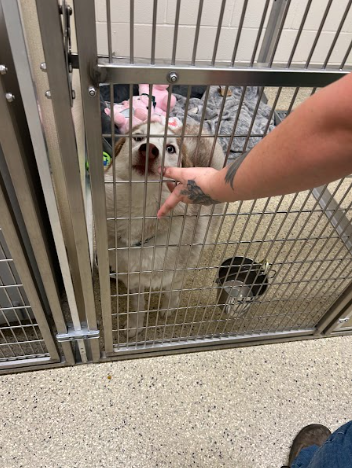
Blaire Taite says about fostering, “It’s also really great, a lot of people feel more involved. . . a little bit more behind the scenes.” She explains how fostering connects the community to the shelter more and how it benefits the animals who get a break of their kennel.
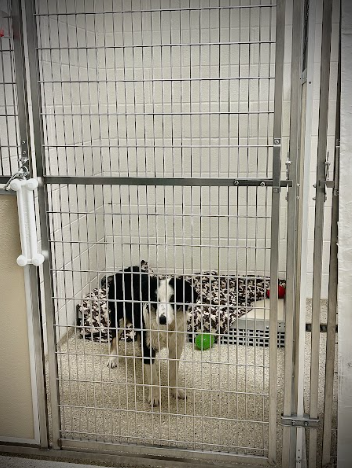
“Probably the hardest part for me is seeing pretty happy-go-lucky pets kind of slowly shut down more and more the longer they stay in the shelter,” Taite shared. While all the staff I spoke with agreed that the dogs there are “living it up”, getting daily enrichment, love, and outside time, it is still hard for the animals to go day after day without finding a place just for them: their forever home.
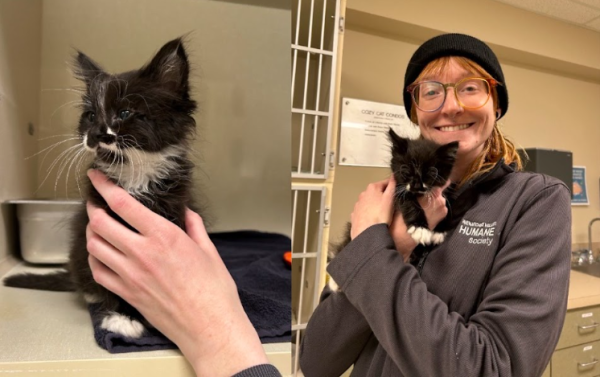
We also spoke lots about the process animals go through upon being taken into the shelter. They cleared up many things for me, such as the different ways an animal can come into the shelter. There are four main ways: owner surrenderment, brought in by animal control, brought in by a member of the public, and being transferred in from a different shelter.
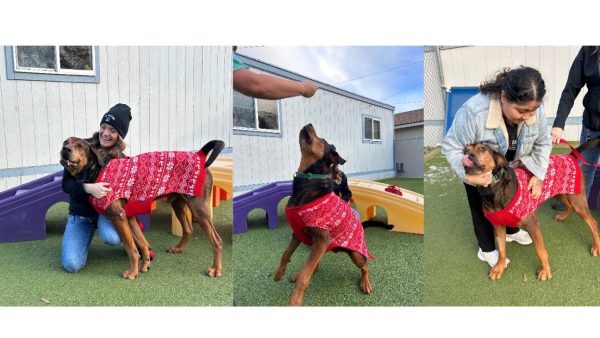
All animals start with an “intake”, which means getting all the vaccinations they need to ensure the safety of their, and the other animals in the shelters’, safety. After getting their core vaccinations, the dogs, cats, or other animals are put in the available space. They are placed where they will best thrive based on their temperament, needs, and wants. There were signs hanging in both the cat and dog sections, informing volunteers, staff, and visitors, how to best support the pets with more timid and shy demeanors.
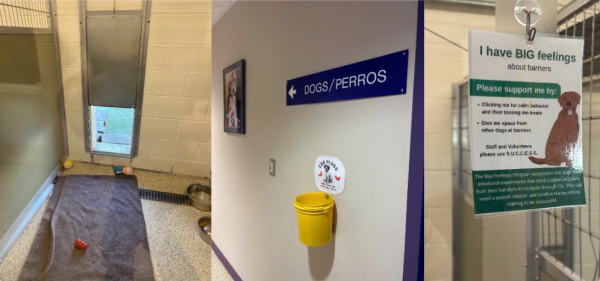
(Ella Gemeinhart)
Stutzman also spoke of the weekly “wellness rounds” that her and the Animal Welfare Safety Committee carry out every Wednesday. Those who accompany her include Yaned Rodriguez, two members from animal control, their vet clinic, behavior team, foster team, and their marketing team. They discuss animals that may be struggling within the shelter’s care and how to best support them. In the morning they go to each individual animal to ensure their health and well-being and judge what they might need to do better.
“We’re here to be their voice,” says Stutzman.
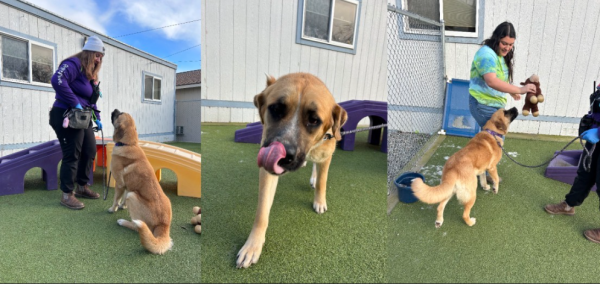
(Ella Gemeinhart)
There are many good and bad things about working at the shelter: for the good, it is very fulfilling work, allowing employees to see animals grow more confident in themselves and start to trust people more. As for the bad, which is more of a melancholy, watching animals leave that you have bonded with can be sad.
“We treat them essentially like they’re our own pets. They feel like our pets. When they go home it’s sad,” shares Robertson, acknowledging that even though they are happy for the animal for finding a place to stay, it is sad to say goodbye.
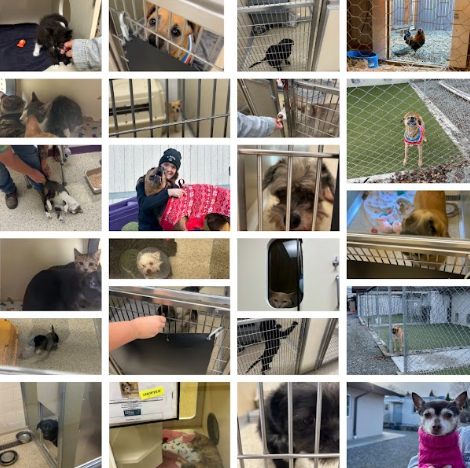
(Ella Gemeinhart)
CAP: Here are the rest of the photos I took on my tour. Note the rooster in the top right – the shelter takes any animal in need of a home, from goats to horses to friendly and social roosters.
“The ideal outcome is adoption. There are circumstances where, whether it be severe medical cases that we cannot treat in our medical clinic and/or severe behavior cases where this animal becomes unsafe to be housed out in the community, that do result in euthanasia. Those decisions are usually pretty lengthy unless it’s a severe case, making it right then and there,” says Stutzman. Euthanasia is only done when necessary, either when allowing pets a dignified, unpainful death, or when ensuring that the community and staff of the shelter stay safe.
All in all, my tour of the shelter was enlightening and informative, showing me an indepth perspective of all that goes on behind the large doors of the Wenatchee Valley Humane Society. If you are curious about what goes on behind the scenes, call, visit, look at their website, just do something to be more informed about what an asset this shelter is to the community. Other ways to help the animals you’ve seen above and the countless more that come in weekly are to foster, donate, or volunteer.
The time is now: the Humane Society needs more resources, especially in the upcoming months when the intake number is very large and space can become limited. Do not wait to help – the shelter and the animals there need our help, support, and understanding.
https://www.wenatcheehumane.org/adoption — Link to the page of available animals at the shelter.
https://www.wenatcheehumane.org/foster — Link to the foster application page.
https://www.wenatcheehumane.org/helptoday — Link to the Donate Now page.


Yaned Rodriguez • Jan 12, 2026 at 12:37 pm
Beautifully written, thank you for allowing us to share a little context behind the doors of our shelter. It was a pleasure connecting with Ella.