






































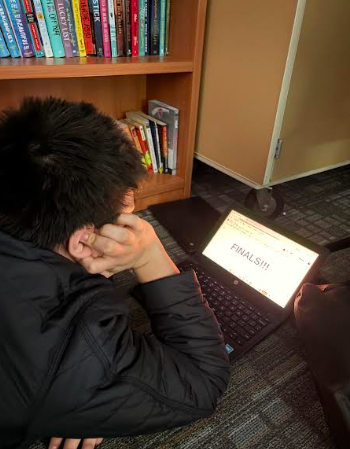
With the end of the semester nearing at CHS, finals are weighing heavily on students’ minds. Finals can cause stress, sleepless nights, and put pressure on students, but they are an essential part of Cashmere’s curriculum. While it’s easy to get swept away in assignments, biology month-long experiments, and long algebraic equations, there are several things that one can do to prepare for the finals and make sure they stay afloat above the stress and chaos that finals week can bring.
When various CHS students were polled, many said that their best way of preparing for finals was to study, but none mentioned what they do for their mental and physical health, which has been proven to be just as important.
Lots of CHS students have different ways of preparing for finals and big tests. Jennifer Herrara, when asked about how she gets ready for these kinds of things, said, “I go into a dark or like a quiet room . . . and I organize it [my notes and work] and kind of rewrite and just look at it over and over again.” Jennifer shared that her best way of studying was to memorize the important facts and knowledge.
Here are some ways to make finals week go by quickly and easily:
Sleep Well
Teenagers need 8-10 hours of sleep each night, and while these are relatively hard numbers to reach, they are essential. When young brains don’t get enough sleep, it can decrease their memory recollection, making it harder to remember those tough facts, even if you studied all night. Lack of sleep can also cause shorter attention spans, which can cause students to miss important details in class.
To get better sleep, there are many things that teenagers can do, most importantly, keeping their phone or other electronic devices outside of their room at night. When you’re winding down to go to sleep, you should be in a dark room with little distractions. Another thing that can help you get tired by the time you want to sleep is to establish a calming and reliable schedule that you can follow every night. Lastly, avoiding the overuse of screens during the hours before bedtime can help you go to sleep faster.
Junior Braden Dahlstrom shared that his preparation for finals consists of “Lots of night studying, reviewing tests or subjects that I didn’t do well on.” When students are busy after school with work, sports, or family matters, it leaves them no choice but to study later when they should be getting rest.
Eat Good Food
Eating a well-balanced and healthy diet can help you stay energized and sharp throughout the day. According to pointloma.edu, some of these brain-stimulating foods include berries, dark chocolate, nuts, protein, avocados, fish, and red, green, and orange vegetables. Harvard Health also suggests green, leafy vegetables such as kale and spinach, and broccoli. Even if some of these foods don’t sound particularly appetizing, your grades might thank you. There are also many ways to eat them in more pleasant ways, such as combining them in smoothies with fruits and yogurts.
While there are lots of beneficial foods, there are also some foods that should be avoided, such as products that are heavily processed, deep-fried food, and sugary drinks. Not only these, but energy drinks are not recommended as they can cause anxiety and are overall bad for your health.
Try A Variety of Study Strategies
There are many different ways to study, and it may take some trial and error to find the strategy that fits each student’s personal academic needs and will help them the most. Top study strategies include flashcards, taking notes, and doing practice quizzes. If these are not options, another favored study strategy is teaching the topic you are studying to someone else. Sometimes, simply talking it out and answering someone else’s questions about the topic can help you understand it so much more.
“I like to use Quizlet, and sometimes I’ll just look at my old notes and see what I didn’t do the best on,” Dahlstrom shares. He also spoke of how teachers can help students by preparing practice tests and helping them know what to expect.
Gwen Ledesma, junior, shared that she also likes to review for big tests by using Quizlet. Ledesma also touched on how knowing what types of questions will be on the test is helpful.
Let Yourself Take Breaks
When you’re feeling overwhelmed and stressed out, sometimes the best thing you can do for yourself is take a break. If you’ve been studying or working for a long time, get up. Go and get a snack or talk to your family. Bring your dog on a walk or just stand outside for a minute. It is just as important for you to take a break as it is to study. Being well-rested and having a calm mind is essential to getting the grades that you are hoping for.
One of the most recommended study strategies follows this rule: study in focused intervals. This means that you might do thirty minutes of intense studying and stay 100% focused, and then take thirty minutes off to walk around, drink water, or talk to friends. Listening to calming music can also help you stay focused.
You can also stay productive on your breaks. For example, it might be worth it to study with your friends, even if you know you won’t get the most done, because it’s a good way to find the fun in the work.
Conclusion
All in all, while you’re preparing for finals, you need to remember to prioritize yourself and mental health while still staying productive. Remember to study a lot, eat well, and sleep long. If you are struggling with keeping up, many teachers offer help during lunch, and before and after school. “Afters” is also a great resource for students looking for help, whether you are assigned it or not.